5 Acts with Amela Karadža and Jovani Zambrano

Welcome to the "Five Acts with..." series, featuring artists, performers, musicians, and more from around the Treasure Valley. In this series, Arts Boise presented artists with five questions (or, in this case, Acts) and below, the answers, in their own words.
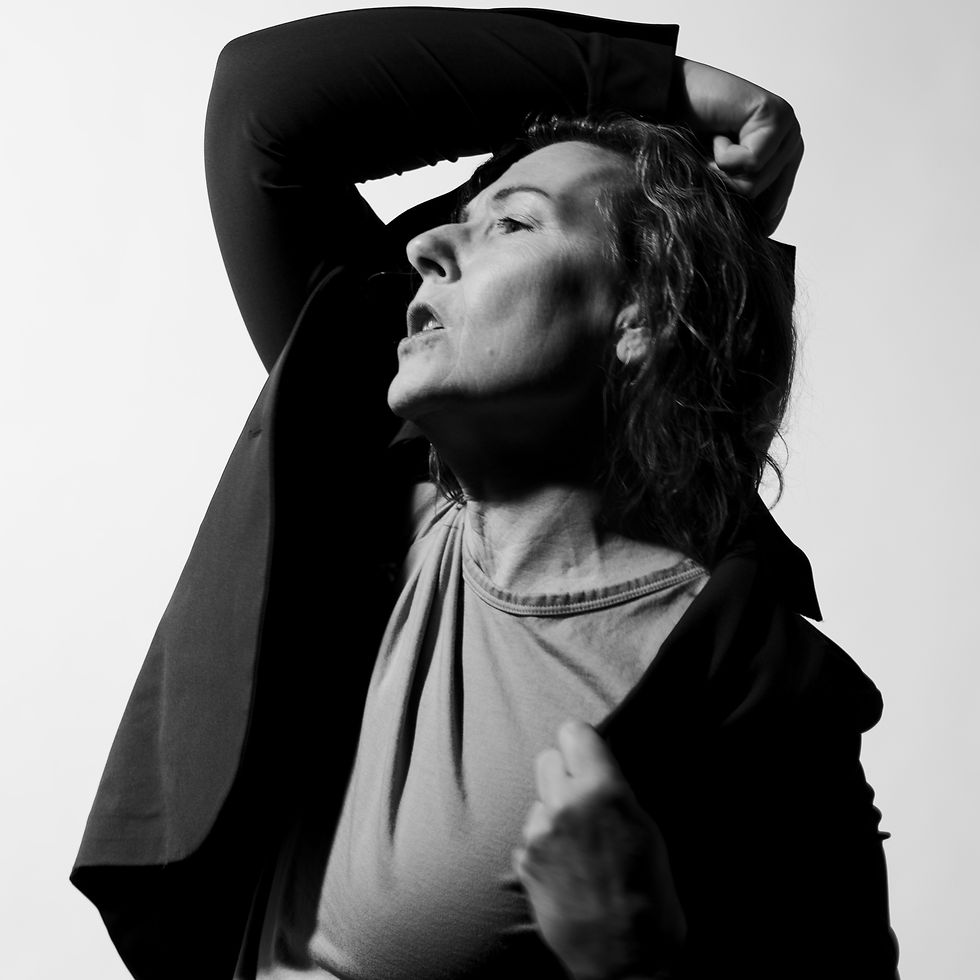
In this round, Amela Karadža and Jovani Zambrano find the spotlight. Amela and Jovani are the founders of Little Branch, a theater company in Boise, ID.
Little Branch exists to uplift diverse voices, build artistic connections, and celebrate the creativity that makes a community thrive. Like the branches of a tree reaching outward while staying rooted, we are committed to bringing varied theatrical experiences to the City of Trees, nurturing both artists and audiences along the way.
In 2025, the company produced Honey Brown Eyes by Stefanie Zadravec. And starting May 7, their second production Sanctuary City by Martyna Majok begins performances at The Lounge Boise.
ACT I: What is your background in the arts?
JOVANI: My time in the arts feels like a rather short one. I've mostly done theater, with a few experiences in commercials and film. My first experience started in third grade when I was in a show to be performed for the entire school and I "magically" got sick when it came time to perform. I was also selected to audition for a car commercial in sixth grade where I was asked to improvise a scene where I was bullying another kid. All I did was stare at the auditioner. I did not say a word, probably wasn't even breathing. I vaguely recall them looking at me with concern, like I was going to internally explode or faint, which may not have been far off.
It wasn't until college that I took an acting class and decided I wanted to pursue it further. I went to grad school to learn more and have primarily done theater since.
AMELA: My love for the arts started back in 7th grade when I was placed in a theater class because P.E. was everyone’s number one choice for an elective. It was a happy accident that changed my life in many ways. I was incredibly shy when I was younger, so the theater class really allowed me to come out of my shell. I was hooked, and have been a theater lover ever since.
ACT II: Why do you love theater? What discourages you about theater? Or what can be improved upon?
What discourages us is money. Everything is so expensive, and funding for the arts keeps getting cut. It costs so much to make and produce, and yet you're almost certain not to make any money from it. This causes theaters to become results-driven, money-driven. The main priority becomes "Will this show sell tickets?" rather than "Will it make a difference? Will it inspire? Will it invite people who have never seen or heard their story told before?" This is why we get recycled shows and safer choices. Shows that appease everyone rather than start a discussion and help people feel heard. And I think that pressure only grows the more successful or well-known a theater becomes.
What gets lost in that equation is the possibility, and it is possible, that a show can fill a theater and change something in the people sitting in it. That it can be a hit and still center voices that rarely get centered. Minority stories, immigrant stories, stories that make a comfortable audience uncomfortable in the best way. Those shows exist. They just require someone willing to bet on them. We're far from being a well-known theater, so we're still able to make that bet but that also means we get even less financial support, so every dollar we lose comes out of our own pockets.
What we love is the magic of theater. The spontaneity of it. We love when a story carries you so completely that you either don't know what's going to happen next, or you don't care because you're not watching anymore, you're just in the moment of it. We love when theater uses that power for something good. When theater inspires, when it gives voice to a story that needs to be told, when someone in the audience sees themselves on stage maybe for the first time. That's when it stops being entertainment and becomes something closer to necessity.
And theater is a place for community in a way that's hard to replicate. Not just between the artists making it, or between the audience members sharing a night together but between the story and the people experiencing it. A good play creates a conversation that starts when the curtain raises and carries out after the show ends.
ACT III: Who and what inspires you?
JOVANI: I find inspiration from other art forms like music, dance, painting, but, and this may sound cheesy, my first thought to the question was animals. Coming from a city and now living in a state with more nature, I've become so much more grateful and observant of animals whether they be deer, squirrels, horses, donkeys, llamas, alpacas, camels, turkeys, etc. Just fascinating how they interact and communicate.
AMELA: Music really inspires me. I feel like I can visualize a play more easily if I know the music the character would listen to. If I’m directing, I love putting together a playlist that I play on repeat—gets me in the world that we’re creating.
ACT IV: Where do you see the future of theater headed?
We see the future of theater headed towards minimalism. This could be both good and bad. Resources and funding are getting scarcer, so theaters have to get more creative. There may be more room for new works or fresh takes on classics over expensive contemporary play licenses. We have learned ourselves, play licenses are not cheap.
What worries us, though, is that minimalism often means designers and creative design get cut first. And that's exactly what we want to avoid. Designers are artists too. When playwrights compose their work, their intentions go far beyond the words. Many stories start with the world that is created. Designers are an essential part of telling that story fully. We're actors first, but we know we can't tell a story without the input of designers. We've been fortunate to work with some really talented ones.
ACT V: What's up next for you? What are you currently working on?
Next for Little Branch is Sanctuary City, running May 7–17 at The Lounge, 2417 Bank Dr, Boise, Idaho.
We chose this play because it feels urgent and relevant to the times and to Idaho. At its heart, it's about showing up for the people around you. About survival. But it also opens a window into the reality of what undocumented immigrants navigate, particularly teenagers who have grown up knowing only this country. They are kids who just want to go to school, get a job, fall in love, build a life. They are sons and daughters first. But the label that follows them is “illegal”, “undocumented”, “alien”. Sanctuary City takes place around 2001, when the cracks in the legal system were already showing. Not much has changed.
The play also connects, in a way, to why we do theater. Our very first production, Honey Brown Eyes by Stefanie Zadravec, told a Bosnian story and what struck us about that play was that it wasn't about the war, even though the war was everywhere in it. It was about connection, survival, and the desperate want for a better life. Sanctuary City carries that same pulse. We're not setting out to make every Little Branch production follow a single theme, but we are drawn to stories that remind us that the people involved are human beings first.
We are really excited to share this story with Boise. We get to do it alongside people who genuinely care about this story, and that makes all the difference. After that we are continuing to build Little Branch, figuring out our next play, and finding more ways to connect with the community through outreach, teaching, events, and more.
And then a much-needed vacation!


Comments